Showing posts with label Revolution. Show all posts
Tuesday, 31 January 2017
Centenary of the Russian Revolution 1917
The Committee for a Workers' International, the international organisation that the Socialist Party is part of have launched a new website to mark the centenary of the 1917 Russian Revolution. Led by the Bolsheviks workers took power in a country for the first time and began to try and build a socialist society. Keep an eye on the website throughout the year for articles on the events of 1917 and analysis of how the Soviet Union later degenerated into Stalinism.
Friday, 24 January 2014
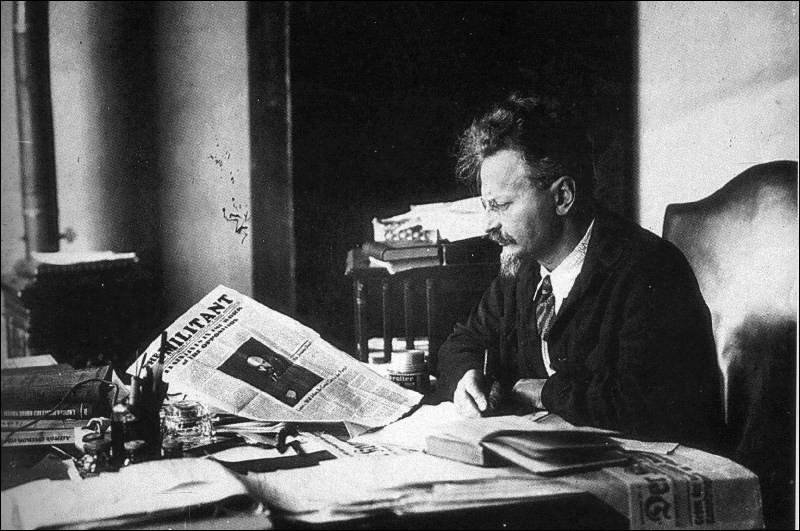
Lenin's revolutionary legacy
A review of "Lenin", by Lars T Lih
In an attempt to answer the description of Lenin by capitalist historians as a brutal dictator, some on the left turn to Lars T Lih. He has tried to reinvent the leader of the Russian revolution as some kind of woolly liberal. In so doing, Peter Taaffe writes in the February 2014 issue of Socialism Today, the understanding of how to build a movement capable of transforming society is in danger of being lost.
In the recent 'revolution' in Ukraine - aimed against Vladimir Putin's attempts to blackmail the Ukrainian government to keep within Russia's sphere of influence - a crowd demolished the last remaining statue of Lenin in the capital, Kiev. Statues like this were erected in the past in the former 'Soviet Union' by the privileged Stalinist bureaucratic elites, who wished to screen themselves from the anger of the masses by basking in the political authority of Lenin. In reality, they were separated by a colossal gulf from Lenin's real ideas about socialism and workers' democracy.In the capitalist West there were few if any statues of Lenin to be toppled. So capitalist historians and academics, particularly after the collapse of Stalinism - and with this, unfortunately, the planned economies in Russia and Eastern Europe - did the next best thing. They vilified Lenin, and his co-leader of the Russian revolution, Leon Trotsky, in an attempt to systematically discredit the ideas of socialism and genuine Marxism.
In a series of weighty tomes a small army of modern 'historians', like Richard Pipes, Orlando Figes, and not forgetting the inimitable Robert Service, undertook a colossal rewriting of history. Figes was publicly exposed as criticising other historians' works while secretly writing laudatory reviews of his own books! Service's 'biography' of Trotsky, which we answered as soon as it was published, has now been discredited even by non-Marxist historians as lacking any objectivity.
Today, however, a new, more 'subtle' approach is required given the protracted crisis of capitalism, which has seen a renewed interest in socialism and Marxism. There is already a revolt in academia against the previous concentration on pro-market, capitalisteconomic teaching. There are increasing demands by students and lecturers that they be familiarised with the ideas of Karl Marx, as well as the more 'radical' of the capitalist Keynesian economists. In this can be perceived an element of the reappearance of the 1960s within the hallowed institutions of learning. The enormous radicalisation of students and academics which developed then was a reflection and, to some extent, precursor to the mass movements of workers in the 1960s and 1970s.
This book by Lars T Lih - first published in the 'Critical Lives' series in 2011 - is a response to this new situation. In it, and in his other writings, he is more sympathetic to Lenin than those historians mentioned above. But the claim on the jacket that the book "presents a striking new interpretation of Lenin's political outlook" is overblown, to say the least. Lars himself admits: "My view of Lenin is not particularly original and chimes in closely with most observers of Lenin and his time". Unfortunately, 'most observers' are still not 'sympathetic' to Lenin's views. This is particularly the case when it comes to the character of the kind of party the working class will need for a successful struggle against capitalism and for socialism.
Workers and peasants
Trotsky, who barely gets a mention in this book, gives a much richer account of the real history of Bolshevism in its initial phase in his unfinished biography of Stalin, albeit in a sketchy fashion. He also outlines clearly the views of Lenin on the crucial issues of the character ofrevolutionary party needed, and on the structures and practices of such a party, including democratic centralism and its origins.Lars on the other hand, writes in a misleading, cloudy and abstruse fashion: "Lenin had a romantic view of leadership within the class. He sought to inspire the rank-and-file activists... with an exalted idea of what their own leadership could accomplish". In the same vein the book is irritatingly peppered throughout with phrases like Lenin's "heroic scenario". Then there are crude assertions on relations between the working class and the peasantry in Russia: "His insistence on the peasant as follower did not exclude an exalted, even romantic view of the peasants in the revolution. Heroic leaders required heroic followers".
Of course Lenin, like most Marxists, could be enthusiastic. In turn, they could be enthused by the spectacle of workers in struggle, especially when it reached a high point of revolution. Marxism is saturated with the spirit of optimism. At the same time, Lenin is deadly realistic about the prospects of the class struggle in general and all the issues involving the fate of the working class. His view of leadership, as with the need for the party, was not 'exalted' but practical and flowed from what was necessary.
Then again, what are we to make of Lars's conclusions at the end of the book when he writes: "Old Bolshevism was defined by its wager on the revolutionary qualities of the peasantry. Yet less than a decade after his death, the regime founded by Lenin was waging war on the peasants and imposing a revolution from above during the collectivisation campaign, contributing to a devastating famine". (p202)
Firstly, Bolshevism never put a 'wager' on the peasantry, but recognised that it could never play an independent role. Therefore, the issue was who would lead them in the revolution - who would satisfy their demand for the land - the working class or the bourgeoisie? History attested to the fact that the working class satisfied the peasantry in action, after the bourgeois and its parties had demonstrated that they would never give the land, as well as peace and bread, to the masses, including the peasant masses. Secondly, it is ludicrous to identify "the regime founded by Lenin", as Lars does, with that presided over by Stalin, already, ten years after Lenin's death, one dominated by a privileged bureaucratic elite. Indeed, Lenin's widow, Nadezhda Krupskaya, famously stated in 1926 that if Lenin had lived, he would have been imprisoned under the Stalinist regime.
The revolutionary party
There are many misleading, and consequently erroneous, statements like this in the book and it cannot therefore be fully embraced as a correct account of Lenin's role in history. But it has been taken up by some on the left, even in certain quasi-Marxist circles. This is because Lars's presentation, particularly in relation to democratic centralism, chimes with a layer who rejects this idea, the 'hard' Lenin, in favour of an allegedly 'more open' one. It is not the first time we have confronted this phenomenon. In the 1960s and 1970s, journals like New Left Review would 'discover' woolly 'ground-breaking new theoreticians' who would then invariably disappear almost as quickly as they had appeared.Lars's ideas have become the current fashion for those who are fleeing from genuine Marxism and the real traditions of Lenin and Trotsky. Vital in this respect is the need for a revolutionary party based upon the traditions of democratic centralism. This in no way contradicts the broader task of organising a mass workers' party at this stage. Of necessity, this will be required to organise on a much looser basis, involving a form of federation and in Britain, of course, rooted in the trade unions. The maintenance of a clear Marxist core within such broader formations is absolutely necessary. Without this, there will be no long-lasting gains for the working class.
History, including recent history, reinforces this point. For instance, the main forces behind the formation of the Scottish Socialist Party (SSP) in 1998 came from our party. The leadership of Militant supported the formation of such a broad party; in fact, we were the first to advance this idea. But the leaders of Scottish Militant Labour (SML) proposed and carried out, at the same time as forming the SSP, the effective winding up of SML into this party. This, in turn, led to their separation from the Committee for a Workers' International (CWI) in Scotland and internationally. They were not expelled but voluntarily departed from our ranks.
We warned at the time that not only would this mean the tragic weakening of a distinct revolutionary organisation and tradition in Scotland but, at a certain stage, the complete disintegration of the SSP as well. Unfortunately, this was borne out. A similar process happened in Italy, where different Marxist organisations joined Rifondazione Comunista (RC) when it was formed in 1991, but were incapable over time of winning the ranks of this party to a clear Marxist position. The RC has now effectively disintegrated.
Compare this to the achievements of Militant, both when it was in the Labour Party - in 1964, we had no more than 40 supporters - and during our expulsion in the late 1980s. The conclusion to draw from this is that in the case of both Scotland and Italy there was not a sufficiently organised and politically trained Marxist core capable of either winning a majority in the party or at least gaining more significant numbers, which could then form the basis of a new organisation or party.
The class, party and leadership
These mistakes flow from an incorrect understanding on the part of some Marxist forces of the relationship between the class, a party and its leadership. 'Democratic centralism' - the term itself - was not an invention of Lenin, but was first used in the Russian workers' movement by the Mensheviks within the Russian Social Democratic Labour Party (RSDLP). However, the conception of a party, its methods of organisation, and how discussion and internal debates should be conducted, have a long pedigree, beginning with Marx and Engels themselves.This is shown, for instance, in the rules of the Communist League of 1847, of which Marx and Engels were members. Even before the term 'democratic centralism' was used, the concept was adopted within this, the first distinct international party of the working class.
In its statutes the Communist League states the conditions of membership: "Subordination to the decisions of the League... The circle [comprising a number of 'branches' as we would understand it today] authority is the executive organ for all the communities of the circle... The various circles of a country or province are subordinated to a leading circle... The Central Authority is the executive organ of the whole of the League and as such is responsible to the Congress... The Congress is the legislative authority of the whole League. All proposals for changes in the rules are sent to the Central Authority through the leading circles and submitted by them to the Congress... Whoever violates the conditions of membership... is according to the circumstances removed from the League and expelled".
Lenin took these and other examples from the historical experience of the workers' movement, including the German social democracy, and attempted to apply them to the specific conditions of Russia. Lenin's famous book, What is to be Done?, written in 1901, was devoted to the need for a centralised party in Russia. Lars deals, not very adequately, with some parts of the history. He touches on the disagreements over the formulas of Lenin in answer to the 'Economist school', who believed in concentrating on the purely day-to-day struggles. Lenin "bent the stick" too far, in his own words, in his description of how socialist consciousness arises in the working-class movement.
Lenin's assertion that socialist consciousness could only be brought to the working class from the outside by the revolutionary intelligentsia was wrong. He borrowed this also from the German social democratic leader and Marxist at the time, Karl Kautsky. Although Lenin corrected this later, it has been used to justify the haughty approach of self-appointed 'leaders', usually by tiny organisations, proclaiming to be 'the' leadership of the working class.
Trotsky paid tribute to Lenin's stubborn and painstaking work in laying the basis through the struggle of theBolsheviks for the mass party approach. Nevertheless, he emphasised that it was the 'steam', the working class, which is the driving force in the revolution. The party, if it acts correctly, plays the same role as a 'piston box' in harnessing this to a revolution.
Lenin emphasised the same point in opposition to the 'committeemen' who took shape in the underground. They were suspicious of the initiatives of workers. Trotsky had warned of the dangers of the emergence of such figures in his 1904 pamphlet, Political Problems. He pointed out that these types of committeemen have "forgone the need to rely upon the workers as they had found support in the principles of 'centralism'." Lenin recognised the dangers of a one-sided interpretation of what he was trying to build when he wrote: "I could not contain myself when I heard it said that there were no working men fit for the committee membership". Trotsky remarks: "Lenin understood better than anyone else the need for a centralised organisation; but he saw in it, above all, a lever for enhancing the activity of the advanced working man. The idea of making a fetish of the political machine was not only alien but repugnant to his nature". (Stalin, p103, Panther edition)
Democratic centralism
Lars T makes sweeping, incorrect comments about democratic centralism. He writes that there was no "exposition of the meaning of the term - Lenin used it in passing to make particular points". He also states: "Lenin's points would have been: 'Democratic centralism is not possible in underground conditions. Genuine interparty democracy is mandatory when possible and dispensable when not'."But he is completely wrong in asserting, with no basis in the actual practice of Bolshevism, that democratic centralism was practised at one stage and then withdrawn in a completely arbitrary fashion at another. The Bolsheviks, as with all genuinely revolutionary organisations, based themselves at all times on the general principles of democratic centralism: maximum discussion until a decision is arrived at and then a united effort by the whole party, group or organisation to implement the decision. Even then, it is totally false to imply that all discussion and debate ended after the decision was taken. The history of the genuine workers' movement showed that vital discussion on unresolved issues continued in the form of internal bulletins, debates, etc, outside of the framework of the national congress of the party.
The different sides of this question might be difficult for isolated intellectuals to grasp but it is an idea that the working class readily understands, particularly its more advanced, guiding layers. It flows from the very position of the working class under capitalism.
Never in history has capitalism been more centralised than today. Never have the means of coercion - witness the revelations of Wikileaks, the massive surveillance by capitalist governments of their own populations, as well as other governments - been so concentrated in the hands of the capitalist state. It is inconceivable therefore that a loose network would be capable of mobilising to defeat this colossal power. Without a centralised mass party capable of unifying working people and then acting in a decisive fashion when the time requires it, it is impossible to carry through the socialist transformation of society, the greatest change in human history.
The working class instinctively understands the need for a centralised party and the discipline that goes with it. This is shown in every serious struggle, particularly strikes, involving the working class. When shop stewards, for instance, are called to discuss and debate an issue, and sometimes heatedly, they will usually strive to adopt one voice when putting the issue to a mass meeting. There will, of course, be occasions when a minority of stewards and workers will disagree with a recommendation, and in that situation Marxists would argue for a full debate to take place.
These methods, which involve elements of democratic centralism, are instinctively understood by working people. This is demonstrated by the recent statement of the National Union of Metalworkers of South Africa (Numsa). When they announced a break from the ANC and supported the idea of a new mass workers' party, they declared: "Numsa is a revolutionary union and as such plays a leading role in the defeat of capitalism and the exploitation that is associated with it. We are democratic centralist - we believe in robust, vigorous and democratic debate leading to a united decision and action".
Discussion and decision
What is then posed is the balance between democracy, full debates and discussions and upholding the rights of all members to participate in the formulation of policy, and centralism, the need to act in a unified fashion, at each stage. This cannot be decided a priori - through general principles applicable at all times irrespective of the concrete circumstances. Organisation, even in the mass revolutionary party, is not an independent factor for a Marxist. It is an inference from policy. It is politics, perspectives and programme, as well as the concrete circumstances, which determine what forms of organisation should be applied at each stage. But it is not true, as Lars T suggests, that democratic centralism is applied only in some circumstances, and not in others. For Marxists, democratic centralism means a 'mobile balance' between democracy and centralism, with emphasis being given to democracy or centralism depending upon the concrete circumstances.In underground conditions, centralist methods tend to dominate over the full expression of democratic discussion, rights and principles. But this does not in any way mean complete centralism with little democracy. On the contrary, while struggling against the brutal tsarist regime and its police, the Russian revolutionaries, including the Bolsheviks, debated and fought with each other over programme and policy. This was a necessary means of sharpening the political and theoretical weapons in preparation for the revolution. There were even regular congresses, both in the underground and during the civil war.
There was full freedom of discussion and debate. But this did not mean for the Bolsheviks, particularly Lenin and Trotsky, that the revolutionary party should become a debating club. To those who characterise this method as inherently 'unhealthy', Trotsky had a word of advice. Faced with the disarray in the ranks of his followers in France in the 1930s, he commented: "An organisation smaller but unanimous can have enormous success with a clear policy, while an organisation which is torn by internal strife is condemned to rot". There are some organisations in Britain and internationally today to whom Trotsky's words are very apt.
Lars T tries to present a softer Lenin, more 'open' and 'democratic' than the 'centralist', if not authoritarian, figure that is usually invoked by bourgeois and most 'Marxist' historians alike. This 'new' Lenin is almost a 'liberal' in his alleged acceptance of open, public, unrestricted discussion in a revolutionary party.
This new approach towards Lenin distorts his real views. There were times when Lenin and Trotsky advocated the most open kind of discussion, even in public forums and at difficult times, which to some extent took place outside of the party. Nikolai Bukharin and the so-called 'Left Communists', who supported him in his advocacy of a 'revolutionary war' at the time of the Brest-Litovsk controversy of 1918, had a daily newspaper which argued against the ideas of Lenin and Trotsky.
The mass communist parties in France and Italy argued in their daily papers against the idea of the united front. But after two years they were compelled to implement the decision of the Communist International.
There are many other such examples, including Trotsky's initial support for the minority within the American SWP in the 1930s for a public discussion on the class character of the Soviet Union. However, he withdrew his proposal when his American co-thinkers pointed out that this minority was appealing in the main to the petty bourgeois milieu outside the party who had moved from support of the Soviet Union under the pressure of 'democratic' public opinion. This did not prevent a vigorous discussion within the ranks of the SWP on this issue.
Anti-party mood
Part of the capitalists' campaign in the aftermath of the collapse of Stalinism was to feed the popular mood, particularly among the new generation, against 'parties' and the model of Lenin's supposedly closed, authoritarian type of party. We argued against this but also recognised that anything that appeared to be tainted with the mark of Stalinism would repel the new generation looking for a political alternative.This 'anti-politics' and 'anti-party' mood represented, in reality, a deep hostility towards all 'official', 'traditional' parties; in other words, the capitalist parties, including the social democrats and even the Communist Party who were identified with the old order.
Moreover, this mood lasted for a considerable period of time and is still an important factor in the political situation in many countries today. We have had the phenomenon of the 'indignatos' in Spain, with similar trends in other countries. In Spain, it reflected the entirely justified hatred of the so-called 'Socialist Party', PSOE. This was a factor in the formation of the indignatos in the first place. But this hostility was also often directed against Marxist groups, although the most active promoters of this within the indignato movement were themselves members of small political organisations. They were, in effect, 'anti-group groups'.
But what was the net result of this abstention from politics? In Spain, the disastrous election of the present right-wing PP government, which has presided over a devastating crisis, with youth unemployment levels well over 50%. Therefore, there has been a reassessment by this new generation who are once more returning to the idea of building a political alternative.
A similar mood was present in the Occupy movement, which developed on a world scale following initiatives in the US. Subsequent experience demonstrated that an amorphous movement, albeit fuelled by youthful energy and idealism but which lacked clear direction and organisation, represented little danger to the highly centralised and organised forces of capitalism. A new road was sought and a significant layer of workers and youth found this road in the spectacular election campaigns in Seattle and Minneapolis.
The election of a socialist to the Seattle council for the first time in 100 years represents a real leap forward in the possibility for political struggles not just in the US, but worldwide. Socialist Alternative took the initiative in this case, but similar radical political movements were expressed elsewhere: in New York with the election of Bill de Blasio, and his invocation of a 'tale of two cities', with 73% of the vote, and the election of 24 independent Labor candidates in Lorain County, Ohio.
A similar process has unfolded in Argentina, where a Trotskyist electoral front received 1.2 million votes in the recent elections. This arose from the completely changed situation compared, for instance, to 2001. Then, despite a catastrophic economic situation, parties were discredited; Marxist parties, in particular, made little headway.
These elections indicate that the situation has completely changed with the more conscious workers now aware of the need for organisation and parties. A layer has consequently transferred their hopes to this 'left front', which is in a particularly favourable situation to grow if it employs the correct tactics and openness to the new layers of the working class who will be looking for a mass party of their own in the battles to come. This is likely to involve the maintenance of a revolutionary core - in a distinct and separate organisation - seeking a wider base in a larger mass formation. There have been other opportunities in the past which have been lost because this open approach has not been adopted.
Look at Lenin in the round
Millions of workers are looking for a new way forward. This can be provided for them by the building of new mass parties of the working class. Because of the period that we have passed through, these are unlikely in most countries to immediately adopt a clear revolutionary, Marxist programme. But a Marxist organisation, working in an honest and open fashion, will be welcomed into the ranks by the best workers looking for a way forward.Unfortunately, books like this of Lars T - and particularly those who uncritically praise his ideas - will not be able to prepare working people for the stormy but exciting period ahead. It does not present the ideas of Lenin clearly. It scandalously ignores the contribution made by Trotsky, in particular.
Our criticisms are not restricted just to the organisational plane. The author does not adequately explain Lenin's ideas in relation to the perspectives for the Russian revolution. The central idea of Lenin of the 'democratic dictatorship of the proletariat and peasantry' was different to the ideas of the Mensheviks, who saw Russia developing in a capitalist direction with socialism relegated to the mists of the future. Lenin completely rejected the idea that the weak Russian capitalists could carry through the tasks of the democratic capitalist revolution: of land reform, solution of the national question, the introduction of democracy, etc. Only an alliance of the workers and peasants, the overwhelming majority of the population of Russia, was capable of carrying through these tasks.
The weak point in Lenin's scenario, that Lars T in no way fully explores, is who would be the dominant force in the alliance between the proletariat and the peasantry. The whole of history attests to the fact that the peasantry has never played an independent political role because of its heterogeneity. Its upper layers tend to merge with the capitalists, its lower layers tend to sink into the ranks of the working class.
This is where Trotsky's famous theory of the permanent revolution comes in, which correctly anticipated how the Russian revolution would develop. Although a minority, the working class, because of its social position in society and its special features, dynamic and organised in big industry, would be able to lead the mass of the peasantry in revolution to overthrow the autocracy. Having come to power, it would then pass over to the tasks of the socialist revolution in Russia and the world. In Lenin's Letters From Afar, as well as his April Theses, he completely concurs with these ideas of Trotsky. This is not even mentioned in this book.
Lars T Lih's book undoubtedly presents an advance over the malicious distortions of Lenin and Trotsky's ideas. But at the same time, unless filled out and corrected, it will introduce further confusion as to what Lenin and Trotsky really stood for.
Lenin, by Lars T Lih, published by Reaktion Books, 2011, £10.95
Monday, 14 May 2012
Greece: Left has opportunity to stop austerity
Following the recent elections in Greece, which saw two out of three voters vote against pro-austerity parties and a big swing to left parties, Niall Mulholland spoke to Andros Payiatsos, from Xekinima (CWI in Greece).
From: http://www.socialistworld.net/doc/5744
What do the election results represent?
The parliamentary election results in Greece were a political earthquake, a crushing repudiation of the pro-austerity parties and the ‘Troika’ (International Monetary Fund, European Union and European Central Bank). This follows years of austerity measures that have led to a collapse in living standards, 51% youth unemployment and mass poverty.
The outgoing government coalition parties suffered a massive collapse in support. The traditional conservative party, New Democracy, fell from just over 33% in 2009 to 18.85% (108 MPs, which includes the 50 seat bonus received by the first party, according to Greek electoral law). Pasok, the traditional social democratic party, crashed from 43.9 percent in the last elections to 13.18% (41 seats). In the past three decades, the combined vote of the two “ruling” parties varied between 75% and 85% of the vote. Laos, the small right wing party that joined New Democracy and Pasok in the austerity coalition for a few months, lost all its MPs.
The biggest gains went to the broad left, Syriza (Coalition of the Radical Left), which rose from 4.6% to 16.78% (52 seats). The communist party (KKE) won 8.48% (26 MPs). The Democratic Left, which split from Syriza in 2010 on a more right wing path, but which also attacked austerity cuts, won 6.1%.
This major swing to the left by Greek voters shows the huge potential for a bold socialist alternative to the capitalist crisis and austerity cuts.
However, serving as a warning to the workers’ movement, the neo-fascist Golden Dawn, exploiting the anti-cuts mood and issues over immigration, picked up 6.97%. For the first time, this far right party entered parliament, with 21 MPs. The Independent Greeks, a recent right wing nationalist split from New Democracy, also entered parliament, with 10.6% (33 MPs).
While the election results revealed a polarisation along left and right lines, many workers and youth saw no viable alternative on offer and simply did not vote for any party. Abstention was much higher than predicted, at a record 35%, and ‘blank’ and invalid votes stood at 2.4%
Why did Syriza gain so many votes?
Syriza gained support over the last two weeks of the election campaign mainly by appealing for a ‘Left government’ against the Troika’s ‘memorandum’.
The supporters of Xekinima pioneered the call for a Left ‘united front’ and for a vote for the parties of the left, over the last months. Unlike Syriza leaders, Xekinima did not call for a ‘renegotiation’ of the crushing austerity measures, but for a Left government to carry out a programme to defend working people. This would include repudiating the debt, stopping all cuts, nationalising the main banks and industries, under democratic workers’ control and management, and fighting for a socialist Europe, as opposed to the bosses’ EU - breaking with the diktat of the Troika and capitalism, in general.
The other main forces on the Left in Greece, the communist party (KKE) and Antarsya (the Anti-capitalist Left Cooperation) both took a sectarian attitude and rejected Syriza’s ‘left unity’ proposal. Yet if the left had formed an electoral bloc, they would probably now be in a position to form a government! With millions of workers yearning for an anti-cuts left government, the KKE and Antarsya paid for their approach in the polls. Their votes remain virtually stagnant: the KKE rose by just 1% (under 19,000) to 8.48% (26 MPs) and Antarsya finished on 1.19%, with no MPs.
Can a new government be formed?
Under the Greek constitution, New Democracy, as the largest party, was given three days to try to form a new government. But its leader, Antonis Samaras, announced on Monday after just a few hours that his party had failed in its bid to create a “national salvation” government.
Given the unambiguous anti-austerity verdict of the electorate, no parties entering a coalition government can do so without at least pledging to renegotiate the ‘memorandum’ with the Troika.
The Troika may be prepared to re-negotiate over aspects of the memoranda and to make some minor concessions. But the Troika will not agree to end its central demands for huge debt repayments from Greece, which can only come at the cost of yet more enormous cuts to welfare, jobs and living standards. The question of Greek membership of the eurozone and even the EU will, most probably, quickly be placed on the agenda.
Greek politics is entering very stormy waters. The invitation to form a government fell to Syriza, the second biggest party. If it fails, the initiative goes to Pasok, and if that fails, to the Greek president, who can try to assemble a coalition.
The combined strength of the Syriza and the KKE, even together with the Democratic Left, in parliament is not enough to form a majority government and, to date, the KKE has refused to accept Syriza’s proposal.
Failure to form a new government would eventually lead to new elections. The ruling class has additional reasons to dread this prospect, as most probably it will lead to Syriza becoming the largest party.
What must the left do now?
Alexis Tsipras, the Syriza leader, said he will strive to form a “left-wing coalition” to reject the "barbaric" measures associated with the EU/IMF bailout deal.
Xekinima (CWI Greece) supports the call for a left government coalition but it must be a government fully committed to opposing all austerity cuts and the bosses’ EU, rejecting the debt repayments and carrying out pro-worker policies, not ‘renegotiating’ for ‘milder’ cuts and ‘more generous’ loan repayments, which still means a lowering of Greek living standards. The Syriza leadership must oppose any coalition or co-operation with the bosses’ parties, which would be a disastrous trap.
There is now a great opportunity for Syriza to publicly put forward a programme for a workers’ government. It is true that according to parliamentary arithmetic the left do not have enough MPs to form such a government. Furthermore, the KKE leadership has, so far, refused to co-operate with Syriza. But huge pressure needs to come from trade unionists, social movement activists and the rank and file of the KKE and Syriza, to insist that both parties reject sectarianism and any ‘cuts-lite’ policies based on ‘re-negotiated’ austerity. The workers’ movement activists want genuine left unity, preparing the ground to form a new left government in the near future.
A programme to unite Syriza and the KKE around opposition to all austerity measures and the EU diktats, for cancellation of the debt and nationalisation of the main banks and industries under democratic workers’ control and for socialist change, as the basis of a workers’ government, would win widespread support from the working class, youth and ruined middle class. It would inspire a resurgence of mass action in the workplaces and communities.
If an attempt is made to form yet another cuts-making coalition, based around Pasok and ND, the left and workers’ movement needs to organise mass opposition, including general strikes and workplace occupations, to stop such attempts, which have no mandate.
Last weekend’s election makes clear that a majority government of the left is possible. If new elections take place in June, the left parties will have a great opportunity to win a majority. This requires the left parties adopting socialist policies – a rejection of the debt repayments and a struggle to break with the bosses’ EU and the profit-system. It also means a strong united front of the left and workers’ movement against the threat of the neo-fascist and far right.
If the left fails to offer a viable socialist alternative, the far right can partially fill the space and grow, and the ruling class will also seek to deploy more authoritarian measures against the workers’ movement resisting cuts.
Friday, 23 September 2011
Tuesday, 19 April 2011
50 Years since The Bay of Pigs invasion.
Cubans resist US backed invasion50 years ago, on April 19th 1961, the workers and peasants of Cuba mobilised to defeat an invasion against their revolution, orchestrated and planned by the US adminstrations of Dwight D. Eisenhower and John F. Kennedy.
(Picture: Cuban militias during Bay of Pigs Invasion)
Approximately 1,300 Cuban exiles- the sons of former landlords, big bankers and the privileged classes- landed at The Bay of Pigs on the southern coast of Cuba. Armed and trained by the US military and Central Intelligence Agency (CIA), the invasion plan was premised on the belief that the Cuban people would rise in support of the expeditionary force and overthrow the revolutionary government.
Instead of being greeted by the Cuban masses, the invaders were surprised by the determination and commitment of Cubans to take up arms to defeat them. Despite taking heavy losses in the face of US air supremacy, over the course of three days the mercenary army was pushed back by a force of militias- workers and farmers who, the first time in their lives, were fighting for the new rights and social gains won during the course of the revolution. These militias were joined by members of Cuba's Rebel Army- a veteran force forged in the fight to overthrow the repressive regime of ousted Cuban dictator, Fulgencio Batista.
After The Bay of Pigs victory, the Cuban government moved to take steps to extend the gains of the revolution by nationalizing wider sectors of the economy through expropriating capitalist holdings in Cuba. This was the exact opposite of what the US capitalist class wanted, and is testimony to the determination of Cuban workers and peasants to retain their newly won economic and social gains. They proved, in action, that US Imperialism was not an unbeatable force, and could be resisted!
As the Cuban Communist Party holds in 6th Congress to discuss measures that could have a profound impact on the future of the Cuban revolution, many workers and farmers in Cuba will remember the events of 1961 and will remain determined to defend their revolutionary gains in the face of the ongoing world economic capitalist crisis and its undoubted impact inside Cuba.
Martyn Ahmet (TUSC candidate, Brislington East)
Tuesday, 1 March 2011
Gaddafi must go! It’s a fight to the finish
Masses reject foreign intervention as towns fall to opposition
Report by Niall Mulholland of the Committee For a Workers' International
http://www.socialistworld.net/doc/4884
Dictator Muammar Gaddafi’s control over Libya suffered big reversals over the weekend with the fall of Zawiyah, a city 30 miles from the capital, Tripoli, to opposition forces. Over 20 people are reported killed in fighting for control of the city, which started last Thursday and lasted four days. Zawiyah, an oil port and refinery, is now surrounded by Libyan army forces still loyal to Gaddafi but they have, so far, not attempted to retake the city.
Imperialism changes its tune
Committees vital
Report by Niall Mulholland of the Committee For a Workers' International
http://www.socialistworld.net/doc/4884
Dictator Muammar Gaddafi’s control over Libya suffered big reversals over the weekend with the fall of Zawiyah, a city 30 miles from the capital, Tripoli, to opposition forces. Over 20 people are reported killed in fighting for control of the city, which started last Thursday and lasted four days. Zawiyah, an oil port and refinery, is now surrounded by Libyan army forces still loyal to Gaddafi but they have, so far, not attempted to retake the city.
The ten day uprising has left at least 1,000 dead and led to thousands fleeing the fighting. Tens of thousands of migrants are stranded near Libya’s Tunisian border.
Other towns across Libya have fallen to the opposition in recent days. Reports from Misrata town say opponents of Gaddafi repelled a regime counter-attack also over the weekend. Tripoli, partially still in the grip of the regime, is increasingly encircled. Tanks and checkpoints guard the main roads into the capital but the situation inside the city is becoming more chaotic and desperate, as crowds queue up outside shops to stock up on essential supplies and besiege banks to get their money.
In a push for a final armed assault on Gaddafi’s remaining support base, groups of heavily armed opposition forces are reportedly planning to march towards western Libya, to link up with opposition militias near Tripoli. The groups are mainly made up of young people and former members of the security forces who defected to the opposition during the fierce battles in Benghazi city which led to Gaddafi losing control of Libya’s second city. A member of the newly announced ‘interim government’ in Benghazi, Ramadan Faitoura, said the armed groups are not part of an ‘official’ drive on Tripoli, although they have the interim government’s support.
Gaddafi’s days in power appear to be shortening fast, although the regime’s demise can still be protracted and accompanied by more bloodshed. A potential major obstacle for an advancing opposition militia is the traditional Gaddafi family stronghold town of Sirte, which sits half way between Benghazi and Tripoli. Although some military and security personnel in Sirte defected to the opposition, it has not been in the same numbers as the east of the country. Gaddafi also has tribal support in Sirte. But this support base can fall away if the areas main tribe concludes that Gaddafi is a lost cause.
Indeed, every day, more tribes and former Gaddafi ministers, high ranking officials and diplomats denounce the regime and declare allegiance to the revolution. Army generals have stated their refusal to order shooting on protests and to launch fighter aircraft against unarmed civilians protesting in the streets.
Gaddafi’s recent speeches show a dictator who has lost control. He makes blood-curdling threats against demonstrators, mixed with anti-imperialist phrases mixed with attempts to foster divide and rule tactics – offering some tribes large amounts of money and land - which are failing. Despite his sometimes “revolutionary” rhetoric and the changes made since the 1969 coup, Gaddafi has ensured that control has remained in his own grip. Hence the luxurious lifestyle and wealth of his own children.
Sensing the way in which the struggle in Libya is likely to conclude, Western powers are now quickly publicly shedding their cosy links with the brutal Gaddafi regime. They are exploiting their past hostility to Gaddafi to present themselves as being on the side of the “people”, something they do not do in regard to the semi-feudal regimes of Saudi Arabia and the Gulf. The imperialists are scrambling to influence a post-Gaddafi regime, to ensure continuing preferential and lucrative Western big business access to Libya’s oil fields and to safeguard imperialist interests in a vital geo-strategic region. The US, in particular, is terrified that the Libyan events could be emulated in oil-rich Saudi Arabia, where youth on the internet are calling 11 March the day of “revolution”.
Imperialism changes its tune
Western leaders have very belatedly discovered they have serious concerns about the lack of democracy in Libya and are now calling for the dictator to step down. The UN Secretary General, Ban Ki-Moon, announced that the new UN Security Council sanctions against the Gaddafi regime were imposed “to speed the transition to a new system of governance”. Even Gaddafi’s good friend, Italian Prime Minister, Berlusconi, instructed his foreign minister to de facto suspend its 2008 ‘friendship treaty’ with Libya, which includes a ‘non-aggression’ clause.Amid reports that Gaddafi moved £3 billion to Britain, last week, the Cameron government froze the assets of the Libyan dictator and his family. British officials also reportedly contacted senior Libyan figures to try to persuade them to defect from the regime so that it collapses, rather than see a last ditch bloody fight to the end. Under the cloak of ‘humanitarian’ aid, some Western politicians are calling for a ‘no-fly zone’ over Libya and even Western military intervention into Libya and Saudi Arabia if mass revolts start there as well. The US has publicly backed anti-Gaddafi groups in eastern Libya.Amongst the Libyan masses, who are well aware of their history of opposition to colonialism, there is opposition to another imperialist intervention in the region. “Despite the heavy sacrifice they are offering every day, Libyans utterly reject any foreign intervention, even for their defence and protection,” writes Mahmoud Al-Nakou, a Libyan author (Guardian 28/02/11). “The people are adamant that this revolution is theirs alone.”Reports from Zawiyah show wide support for the uprising and also repudiate Gaddafi’s propaganda claims that the rebels are made up of drug-crazed youth and al-Qaida-inspired foreign fighters: “…they were the town’s people…the doctors and engineers, teachers, local youths and old men…”, reports the Guardian (London 28/02/11).Various ‘community committees’ and ‘councils of the elders’ have been set up in Benghazi, Musrata and Zawiyah to ‘restore order’ and opposition forces controlling eastern cities have formed a ‘national council’ in expectation of the fall of Tripoli.The former justice minister, Mustafa Abdel-Jalil, announced that he would head an interim government, suggesting that it has the backing of the US. He also said an agreement could be reached with the sons of Gaddafi, echoing some Western politicians.Although Mustafa Abdel-Jalil’s comments are disputed by other opposition figures, they still intend to include him in an interim government. This should act as a warning to the Libyan masses – their revolution is in danger of being hijacked by remnants of the Gaddafi regime, pro-bourgeois opposition ‘leaders’, reactionary tribal leaders and imperialist interests.
Committees vital
For the revolution to win its goals – for real democratic rights and a transformation in living standards – it needs democratically-elected committees that truly represent the interests of the mass of working people, youth and the poor, in the neighbourhoods, workplaces and colleges, linked up at local, regional and national levels. Building committees within the forces of the state is also vital. Putting forward democratic demands as well as those needed to assure decent living standards, such a movement can appeal to the masses of Tripoli to rise up against Gaddafi’s last stronghold.
The masses armed, under democratic control, can defend themselves against Gaddafi’s forces, march on his last bases of support, and sweep away the dictator and his entire regime while preventing the country once again falling under foreign control. Such a mass movement would immediately introduce full democratic rights and oversee elections to a revolutionary constituent assembly. A government representing the interests of workers and small farmers would take the oil fields into public ownership, and other major planks of the economy, under democratic workers’ control and management. This would ensure that the country’s huge natural riches serve the majority of society not only an elite around the corrupt Gaddafi family and giant multi-national companies.To ensure this, mass organisations of the working class need to be formed, including independent unions and a mass party of the working class, with bold socialist policies. Such mass class organisations would oppose not just Gaddafi and the remnants of his regime but all pro-capitalist and reactionary forces in Libya and meddling imperialism.
Subscribe to:
Posts (Atom)