Showing posts with label Police. Show all posts

Wednesday, 12 April 2017

Bristol Socialist Party Shows Solidarity With Jobstown Protesters

Members of the Bristol North/East branch of the Socialist Party showing support for Jobstown protesters.

Members of the Socialist Party in Bristol have added their support to an international campaign of solidarity with protesters in Ireland who face kidnap charges for their participation in a sit-down protest that kept the then Deputy Prime Minister delayed in her car. 

The arrest and trial of these protesters (due to start on April 24th) have shown the police and judicial system playing a nakedly political role. This is an anti-democratic attack on the right to protest and it must be opposed by campaigners across the world. 

See www.jobstownnotguilty.com for more information. 


Tuesday, 31 January 2017

Bristol Police Taser Their Own Race Relations Adviser

The Justice for Judah meeting called in response to the incident.

Footage of police in Bristol tasering an innocent black man has made news around the world. The attack was even more shocking because the victim, Judah Adunbi, was a prominent member of the police's race relations group.
The video, captured by a neighbour, shows the 63-year-old being confronted by police with their taser already drawn. They had the wrong person, but threatened to arrest him when he legally refused to give his name.
Officers blocked him from his own back gate, pushed him back and tasered him, causing him to fall to the ground. He had to be taken to hospital and was then held by police for ten hours.
Unbelievably, the victim was charged with assaulting a police officer despite video evidence showing the opposite. The person filming accurately countered police claims: "He wasn't trying to fight... you started it. You both made physical contact first."
The charges have now been dropped. Mr Adunbi was also attacked by police in 2007, and was clear that this was a racist incident.
Sadly, statistics show institutional racism still exists within the police. Avon and Somerset Constabulary's own figures show officers are twice as likely to fire tasers on oppressed racial groups once drawn.
Nationally, black and Asian people are almost three times as likely to be stopped and searched as white people, according to Home Office data from last year.
The Black Lives Matter movement that erupted in the US following police murders of black people has been taken up in this country as well. The anti-Trump protest in Bristol showed its support, stopping outside a police station chanting: "No justice, no peace! No racist police!"
We need to fight for democratic community control of police policy and hiring to start to address institutional racism in the police.

Report of Justice for Judah meeting

Around 200 people crammed into a meeting in St Pauls, Bristol, on 28 January to discuss the horrendous tasering of a police race relations group member Judah Adunbi.

There was a feeling of anger at what had happened and a desire to achieve justice for Judah but it didn't stop there. Speaker after speaker from the floor talked of personal experiences of injustice and that enough was enough. Action needs to be taken to ensure this stops now.

A campaign has been formed by the community, and Avon and Somerset police are in the spotlight. Further meetings and events are set to be arranged to highlight the case and the racist policing. The elected police commissioner, Sue Mountstevens, sat silently throughout the meeting, declining the opportunity to comment.

Bristol mayor Marvin Rees spoke to highlight the racial nature of the problem but declined to indicate how £101 million of cuts to council services are likely to make things better.

This when a recent report from the Roundtree Foundation indicates that Bristol is one of the most unequal cities, with the BME population trailing behind in job opportunities, health, and social access.

Wednesday, 8 June 2016

Pathetic Fascist 'Demo' Outnumbered by Anti-Fascists in Bristol

The racist, fascist group the South West Infidels called a demonstration in Bristol for last Saturday. In the end they mustered only around 20 people, stumbling out of the pub and up the road under heavy police protection. They were outnumbered by ten to one by anti-fascist counter-demonstrators. Socialist Party members were among them as we tried to prevent the fascists from marching, spreading their message of hate and posing a threat, especially to anyone who isn't white. We also took part in a demonstration of 250 earlier in the day, opposing racism and supporting the rights of refugees. The far-right were comprehensively beaten in terms of support in Bristol.

The pathetic spectacle of the fascist demo would not have even been possible if not for the extraordinary lengths the police went to protect them and allow them to march. The police spent £100,000 policing the day to make it happen, drawing in support from surrounding forces. Hundreds of police tried to prevent counter-demonstrators even reaching the fascists. Police officers and vans surrounded the fascists to protect them while police dogs and horses were used to clear anti-fascists from blocking their path. At the end of their march they were shepherded behind a huge, solid metal wall that surrounded the whole of College Green. They were joined inside by Stoney Garnett, who stood in the recent mayoral election as an independent. It seems that once inside they were then put behind another fence, just to make sure! (see below)

Questions must be asked of why the police did so much to help them march. They've never shown the same degree of willing towards other demonstrations, in fact they've put obstacles in the way of their being organised. They've claimed in the past that they didn't have the resources even to simply help manage traffic to help keep anti-cuts demonstrators safe. Police have tried to charge organisers of St Pauls Carnival for their operations on carnival day. This has meant that this hugely popular African Caribbean festival which brings together thousands of people of all backgrounds isn't happening properly again this year. How can the police justify these double standards?

As they left with chants of "Nazi scum - off our streets!" still ringing in their ears the 'Infidels' must have known they're not welcome in Bristol. However we will remain vigilant for any attempts to return and will try to make sure the anti-fascist and workers' movements in Bristol are as well organised as possible to drive them away.


Monday, 16 July 2012

Socialist Party report: Bristol protests counter racist EDL

About 1,000 anti-racist demonstrators gathered in various locations across Bristol to protest against the march of the far-right, racist English Defence League (EDL) on Saturday 14 July. As the event coincided with the Bristol Pride event there was also a separate anti-racist march organised by the LGBT community.

Pressure from campaigners had forced the EDL to keep their march confined to backstreets of the city, far away from passers-by and ordinary Bristolians. Their march which was only seven minutes long, muscled up a national mobilisation of only 300 supporters. An enormous £500,000 was spent policing it.

There were over 1,000 police officers drafted in from all over the country, with 14 arrests on the day including for racially aggravated assault.

In the days preceding the march the police had written a series of belligerent articles in the local press sowing confusion and attempting to intimidate anti-EDL protesters into staying at home. This even went so far as a last minute change of venue, with protesters being warned not to assemble in the planned assembly point in the centre of Bristol.

This did not prevent trade unionists, anti-racists, members of community groups and even young families with children from assembling in the centre for a march through the city and rally in the nearby Castle Park.


Confusion


The main organisers of the event, a temporary group set up under the name 'We Are Bristol', in reality Unite Against Fascism, also bear some responsibility for the confusion on the day.

Weeks of organising meetings between UAF and local anarchist groups had unfortunately resulted in the calling of two separate events, one in the centre of town and one at Temple Meads railway station.

Even as late as the week before, no negotiations had begun with the police, no march had been organised beyond a 'static protest', and no trade union stewards had been appointed or organised to help defend the march from EDL attack or police harassment.

The Bristol & District Anti-Cuts Alliance had raised concerns about this and put out a call for stewards. As a result, on the day, local trade unionists, including Socialist Party members and a large delegation from PCS, stepped up to steward the protest.

But even after the march had begun to move, led by various trade union banners from across the region including Cardiff Trades Council, there was an attempt by UAF to 'hold the centre' and keep part of the protest in one place, despite having no clear strategy for breaking through police lines or confronting the EDL.

It was at this point that several protesters were arrested and the police moved in to kettle the remaining protesters. This would have cut the protest in half before it had even started but was fortunately prevented by the trade union stewards who kept the march together.


Fighting Austerity

Assorted Labour Party members - councillors, an MP and a prospective mayoral candidate - turned up to speak at the final rally. However, no criticism of New Labour's support for austerity was raised by the UAF's speakers. Only Roger Thomas, speaking in a personal capacity from PCS, drew attention to the Labour Party's culpability in administering the cuts that destroy communities and help racism to thrive, and called for an alternative of jobs and homes, not racism.

This message got a great response and shows that many demonstrators understood that the fight against racism and all forms of discrimination needs to be linked to a fight against the conditions that divide us in the first place.

The UAF organisers said they could not take up these questions because they wanted a 'broad umbrella' that would maximise turnout on the day. However, a mass united demo was not achieved, instead there were disparate protests.

Faith groups and Muslim community leaders followed the Liberal Democrat councillors in tolerating the EDL's march in return for holding a 'multi-faith' event in celebration of diversity on Sunday 15 August. Some Muslim leaders even went so far as to call for dialogue with the EDL!

It was the organised labour movement that was best able to outnumber and embarrass the EDL on the day, and even though, as a result of the massive police presence, we could not physically block the EDL from marching, this was still a success.

But the EDL and groups like them will not be defeated unless we can build fighting organisations to resist the austerity that does so much to alienate and divide ordinary people of all races, religions and backgrounds.

Video: Bristol Demonstration against EDL


Trade Unions, Trades Councils, anti cuts alliance and anti fascist groups came together for a mass protest against the EDL march on July 14th. This shows the march along Baldwin Street, from to Centre to Bristol Bridge. The EDL had a 7 minute walk, down the back streets of Bristol where they were then caged in Queen Square.

Wednesday, 11 July 2012

Oppose the EDL in Bristol - this Saturday 14th July

Info from Bristol & District Anti-Cuts Alliance:

Opposing the racist English Defence League march in Bristol on 14th July: Latest News…

The South-West regional Trades Union Congress (TUC) has called on all Trades Unions & Trades Councils and their members to support the organised events to counter the far-right. This is the resolution passed:

The TUC South West Regional Council opposes the planned march of the English Defence League (EDL) in Bristol on the 14th July 2012.

The Regional Council notes the group “We Are Bristol”, that has been set up to counter the English Defence League march and to organise a rally against racism, in the centre of Bristol.

In recognising that the Trades Union Councils Joint Consultative Committee (TUCJCC) agreed, as a strand in the Programme of Work for 2011 – 2012, Fighting Fascism and the Far Right, and in particular:

• Counteracting the moderate face of fascism with campaigns which reveal the BNP, EDL and others real agenda,

The South West TUC Regional Council urges all Trade Unions and Trades Councils that are affiliated to SWTUC, to support the organized events to counter the far Right in every way possible. This should include where possible;

• South West TUC and affiliates agreeing and supporting the “We Are Bristol” Statement against the EDL,

• Trade Unions and Trades Council’s to publicise the events to counter the EDL in Bristol,

• effective encouragement for all Trade Union and Trades Council members in the South West to attend the events to Counter the EDL on the 14th July in Bristol.

Despite the vast amount of publicity there has been about the various counter demo’s planned to oppose the EDL and their hate-fuelled message, the police have put out the following disingenuous and threatening message via ‘The Post’…

“As far as we know there will be no counter protest in the city centre. Counter groups have either not come forward or do not want to inform us of their intentions.

“We will have officers in the city centre area so that we can respond should a counter-protest begin.

“As soon as we see any mass movement start up we will make sure that they do not have access to the EDL, nor to the gay pride event happening on College Green.”


Assistant Chief Constable Anthony Bangham, Avon & Somerset Police

(Full article here: http://www.thisisbristol.co.uk/Half-million-pound-cost-police-right-wing-march/story-16477189-detail/story.html)

In light of this sort of attempted intimidation, it is even more vital that as many people as possible turn out on the 14th both to show the EDL that their vile bigotry is not welcome on the streets of our city and to show the police that we will not be intimidated into not protesting – especially as the bill to us as council tax payers is estimated at between £500,000 and £1 million!


Three main counter demo’s have been publicised:

‘We Are Bristol’ / Unite Against Fascism (UAF) rally & march: Assemble 11am at the Fountains, Bristol City Centre. Supported by BADACA and many other local trade unions and campaigning organisations. More details here. Facebook grouphere.

Bristol Anti-Fascists: Assemble 11am at Temple Meads Station. More details here. Article from ‘The Post’ about Bristol Anti-Fascists here. Twitter account: @stopedl /hashtag: #stopedl

Anti-Racist and Proud @ Bristol Pride Parade (anti-EDL contingent in the main We Are: Proud Parade): Assemble 11am at Berkeley Square (BS8) for march to College Green. More details here.

Let’s send the EDL a clear message that they are not welcome on our streets so that it’s at least another 35 years until the far-right try to march in Bristol again!!! See you on 14th!

More information…

BADACA statement on EDL march

More about the campaign against the EDL march

Official Police & Council leaflet for residents (including the planned route.)

Friday, 13 January 2012

Stephen Lawrence murder - the untold story

How socialists and the local community fought back against racism and the BNP

On 3 January 2012 Gary Dobson and David Norris were found guilty of the horrific murder of black teenager Stephen Lawrence and sentenced to life imprisonment. Stephen was murdered almost 19 years ago in a racist attack by a white gang in south London.
Media coverage after the trial has focussed on the issues which emerged after the murder - such as institutionalised police racism and police incompetence, and how much has changed since. But there has been little mention of the presence of the far-right racist British National Party (BNP) in the area at the time and also the united community and trade union anti-racist campaign to drive them out.
Lois Austin, then a leading activist in Youth Against Racism in Europe (YRE) and the Labour Party Young Socialists, whose branches initiated the campaign, spoke to the Socialist:


Firstly I want to pay testament to the Lawrence family and how strong and tough they've been to see it through this far. It is galling to see parts of the British establishment and the right-wing media, such as the Daily Mail, lauding the Lawrence family. At the time most of the British establishment turned its back on the family and the justice system didn't deliver for them and neither did local politicians.

In the late 1980s and early 1990s YRE was involved in a local campaign that eventually closed the racist BNP's headquarters in Welling.

Immediately after Stephen's murder we made appeals to Bexley council and the press to help get the BNP out because it was the BNP's divisive campaigns that were leading to an increase in racism and racist attacks in the area.

The media has also been almost completely silent on the mass protests that took place after Stephen Lawrencewas murdered.

Much has been said about the Lawrence family being left isolated and alone and they were by most of the political and media establishment, but that was not the case when it came to support from ordinary people. Thousands came out onto the streets to show their anger at the murder and their support for the family.

In May 1993, just a few weeks after Stephen Lawrence was murdered, over 8,000 joined a demo called by YRE and others - including Panther, the black socialist organisation. Mainly local young people, black and white, marched past the BNP HQ demanding that something must be done to rid our area of these racists.

Read the rest of the article:  http://www.socialistparty.org.uk/articles/13470/11-01-2012/stephen-lawrence-murder-the-untold-story

Friday, 11 November 2011

NSSN condemns Police kettling construction electricians

http://www.shopstewards.net/

The National Shop Stewards Network (NSSN) condemns the actions of the police yesterday (November 9th) in kettling over 200 construction electricians for well over an hour. Workers, including many in their 50s and 60s, were left standing within a ring of riot police with no access to food, drink or toilet facilities. At the end of this harrowing experience, coming after they had spent most of the day marching, they were subject to a search and, we believe, unlawfully forced to give their names and addresses. No doubt many of these workers will be getting a letter from the Met's new commissioner, warning them off future peaceful protests!

Their crime? After marching in protest at the plans of the big construction companies to smash their Joint Industry Board (JIB) contracts which will cut their wages by up to 35%, they wanted to show solidarity with the many students who have supported their 3-month long campaign by joining their demonstration. Out of the 2,000 workers who took part in the Unite-organised march to the Balfour Beatty site at Blackfriars, about 300 started to make their way up to Fleet Street to wait for the student protest so that they could march with them.

Disgracefully, police converged on these workers and barred the way and were later joined by members of the Met's Territorial Support Group, successor to the notorious Special Patrol Group! Startled by their actions, some managed to push through the lines while the others were stopped and quickly contained. It became clear that the intention was to keep us kettled until the student demonstration had marched past. In a magnificent show of solidarity, we believe led by the Jarrow marchers and other student campaigners, the students stopped their march in an attempt to relieve the electricians' siege. However, such was the overwhelming presence of police on the student protest, it was eventually forced to continue. Finally, the electricians were let out of the kettle but not without being forced to give their personal details. Why? Because the police's commanding officer deemed that a 'breach of the peace' was likely! Reasons given for believing this after an entirely peaceful march included worries of a repetition of the incidents of last year's student demonstrations, that the march, having 'deviated' from its agreed route, was now 'illegal' and even, most scandalously, that the electricians were going to attack the students' demo!

The police may have achieved their aim of stopping significant numbers of these workers from joining the students but if anything their repressive and undemocratic actions have brought home to both groups how the police are being used to attack the rights of protest and assembly. The police action yesterday is the first instance to our knowledge of workers being on the receiving end of the same treatment meted out to students and young people over the last few years, and particularly over the last 12 months.

This is being done in the interests of this government that is making working-class and many middle-class people, young and old, pay for the bankers' crisis and ruthless companies, like Balfour Beatty that has an order book of £15 billion and has made £91 million profits in the last 6 months, yet has given 1600 of its workers notice that they will lose over £200 a month in wages. The NSSN has supported the electricians' protests over the last 3 months, which has grown in support despite the media blackout and we support Unite's strike ballot against Balfours.
Like the students, these workers had a tremendous reception from bystanders in central London, even though the first leg of their march, organised by rank and file electricians, started at the Pinnacle in Bishopsgate at 7am! Buses came from all round the country, with theNewcastle coach leaving at midnight. All unions and anyone who still believes in the freedom of protest and assembly must condemn yesterday's events. On November 30th, 3 million workers will be striking against the ConDems' attacks on public sector pensions. Many of them will be joining rallies and demonstrations. It is clear from yesterday, that the best protection for our civil liberties is to ensure that these demonstrations are numerous, as big as possible and very well stewarded.

Saturday, 13 August 2011

UK Riots: Mass trade-union and labour movement needed

Analysis By Judy Beishon, Socialist Party of England & Wales -
http://www.socialistparty.org.uk/articles/12534


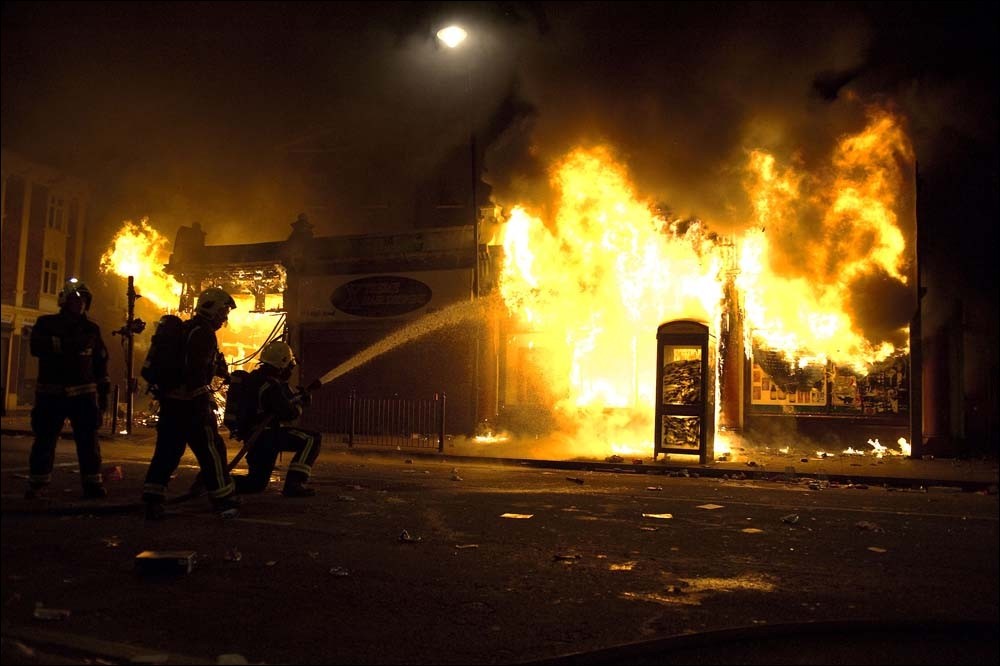
The four days of riots that followed the shooting dead of Mark Duggan by the police in Tottenham sent a massive wave of shock across the country.

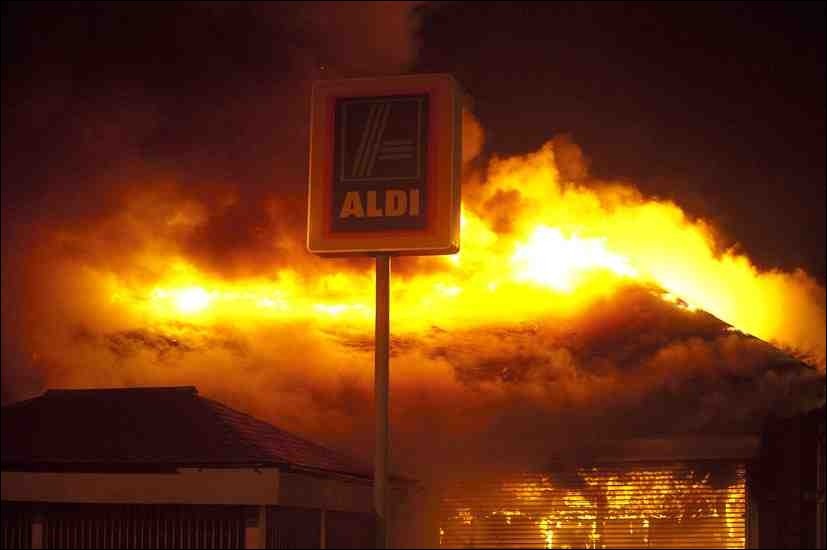
"Over the last few days the state has lost control of England's streets" was the panic ridden comment of the Financial Times. Five people tragically died, over 100 people lost their homes and over 48,000 shops, pubs, clubs and restaurants were affected in 28 town centres.
Sporting and leisure events were cancelled and virtual curfews operated in many areas - from Hackney in London to Toxteth in Liverpool - out of fear of venturing onto the streets.
In the areas where the eruptions broke out, almost no one felt completely safe, for themselves, their families and their homes. In places not directly affected, people feared what could come.
That these events have changed the political landscape and impacted strongly on mass consciousness, is without doubt. Internationally there was also shocked reaction, with exaggerated comparisons being made with violence in Somalia and other former or existing conflict zones.

Just a year before the London Olympics the British government's international standing has been severely damaged. Prime minister David Cameron dismissed the street eruptions as "criminality pure and simple" and branded "pockets" of UK society as "sick".
However the sickest pocket of all in society is him and his fellow multi-millionaires in the British ruling class, who have nothing in common with the ordinary people who have been the hardest hit victims of the looters and arsonists.
Con-Dems responsible

The Socialist Party gives absolutely no support to rioting as a method of protest, but we place the blame for what has taken place firmly on the Con-Dem government and say that it must be removed from office.
This government, on top of previous governments, has worsened and presided over a nightmare situation for working class youth, and many in the middle class too.
Even young people with the greatest determination to 'succeed' are in despair over the shortage of jobs on decent pay and affordable accommodation that could give them independence from parents and a decent future.
It's no surprise that some young people have become so marginalised through lack of opportunity that they have become involved in gang crime, and many of them have developed - out of bitter experience - an overriding hatred of the police, mainstream politicians and other representatives of capitalist authority.
An onlooker to the riots in Hackney was quoted in the Times as noting: "Unfortunately this is about as empowered as many of these lads have ever felt in their lives and ever will feel".
A general "kick against authority" was among the verdicts of the Independent newspaper. How sickening has been the moralising about "teaching young people respect" and "the difference between right and wrong" as Brian Reade wrote in the Mirror and others have done.
However mistaken - or criminal, as a fringe element of arsonists etc were - the young people who were involved in the eruption can see how "wrong" the greed, corruption and amassing of vast wealth at the top of society is, with the resulting huge inequality.
And what "respect" did MPs show when they stuffed their pockets with expenses, or top police and politicians show when they tried to protect Murdoch's phone hackers? What an irony that the London Met police were trying to quell this wave of violence without having their chief commissioner's post filled because the ex-chief had resigned under a cloud of corruption.

Not so 'mindless'

Plenty of riot participants who have been dismissed as non-political 'mindless criminals' have made political comments to the media against the rich, MPs and of course the police, whose act of brutality triggered the start of this wave of rioting.
The strong anger at Mark Duggan's shooting by the police was justified, especially as it has since been officially confirmed that the initial police version of what happened was false.
As with the shooting of Jean Charles de Menezes in 2005 and the death of Ian Tomlinson in 2009, the truth of what happened was initially suppressed. Black people in particular have been treated almost universally as criminals by the police, they are seven times more likely to be stopped by the police than white people, and this rises to 26 times more in 'stop and searches' carried out under the 1994 Criminal Justice and Public Order Act.


But the wave of chaotic and violent revolt encompassed many other sections of youth as well as a section of the black youth in Tottenham, becoming very mixed in composition, with some areas - such as in Enfield - having predominately white participants, and others drawing from a number of ethnic minorities.
As the court cases are showing, the rioting and looting involved low paid workers as well as the unemployed - a reflection of the scale of anger and alienation that also exists in this layer.
But much of the media is deliberately playing up the participation of young people who have jobs in order to downplay the plight of the unemployed "have-nots"; however, one article mentioned the truth: that those appearing in court are overwhelmingly young, male and unemployed (Guardian 12.8.11).
The eruption took a different form in each area. For instance in the London boroughs of Tottenham and Hackney it took place in the midst of working class communities and was a relatively indiscriminate lashing out.
In Manchester, small independent shops were among those looted, but a particular target was the major chain shops and luxury goods. But whatever form the rioting took, and whatever momentary kick was gained by giving "a hamfisted two-finger salute to the authorities" as a Guardian journalist described it, the consequences show that it was counter-productive, for the participants, for the communities that suffered the destruction of people's homes, livelihoods and in some cases lives, and for working people in general.

Heavy sentencing

Over 1,800 people have been arrested and hundreds charged. Offences vary from the minor to the very serious, but magistrates have been rapidly dishing out draconian 'teach them a lesson' sentences for even the most trivial cases.
Some of the young people charged have no previous convictions and made the mistake of momentarily succumbing to temptation to steal goods that were no longer locked away - and are now facing draconian, disproportionate prison sentences as a result.
These include a college student who has been jailed for six months for stealing a £3.50 case of bottled water and a recent university graduate who took a TV and quickly handed it back in after the riots, saying she didn't know why she had taken it.
The Guardian reports that 3.5% of all cases heard in magistrates' courts last year resulted in remand in jail, but for the cases heard so far following the riots, it is 60%.
Cameron recently said that he had given Coulson, the disgraced former News of the World editor, a "second chance", but he will offer no such thing to the hundreds of young people who got caught up in deeds this week on the spur of the moment that they later regretted.
Those judging them are part and parcel of a judicial system that prioritises the defence of the private property of the rich, and are clearly pursuing a reactionary political agenda in these cases.
The trade union movement should demand the setting up of a democratically run inquiry into the riots involving elected representatives of trade unions and community organisations, that could also set the parameters on how the offences are dealt with, with the right to review sentences already imposed.
The prison population in Britain is already the highest it has ever been and a majority of prisons are overcrowded. The rate of rehabilitation is very poor; almost half of all prisoners are reconvicted within a year of release.

More repressive powers

It is not just the participants in the riots who will suffer the strong arm of the state forces, but trade unionists, anti-cuts campaigners, environment campaigners and others will now be faced with increased police powers and crowd control equipment in future struggles if the government's present plans are carried out.Cameron has said water cannon will be available at 24 hours notice. But a feature of the eruptions was "flash riots" - spreading fast through use of Blackberry Messenger and other social networking.
Water cannon are useless in this type of situation as they can't be everywhere at once. But they can be used against more static crowds and pre-organised march routes, that are usual in organised demonstrations of the labour movement.
When parliament - for the second time in a month - was reconvened on Thursday, other plans for repressive powers were outlined, including using army intervention; extra dispersal and curfew powers; increased powers to order the removal of face coverings; the spraying of semi-permanent dye; restricting the movement of 'gangs'; and blocking access to social networking media during times of 'social unrest'.
The eviction of offenders from council homes has also been raised. At the start of the riots, the police took a relatively low-key approach as they were terrified of provoking an escalation, but as criticism mounted they became more aggressive, including driving armoured vehicles at rioters in Lambeth and Ealing.
The future use of plastic bullets (baton rounds) was being discussed, though these lethal weapons may not be employed at this stage as some senior police representatives are opposed to it.
These include Hugh Orde, president of the Association of Chief Police Officers, who authorised water cannon and baton rounds in Northern Ireland in the past, but said during the riots:
"I do not think it would be sensible in any way shape or form to deploy water cannon or baton rounds in London.
"Baton rounds are very serious bits of equipment. I would only deploy them in life-threatening situations.
"What is happening in London is not an insurgency that is going to topple the country".
However, a major campaign needs to be launched against the increased powers that are being proposed, which will reduce the democratic rights of everyone.
No increase in repressive measures will remove the deprivation and discontent that lay behind the riots - they will only increase it, especially when considered together with the scale of the spending cuts that are still to be carried out and the extremely weak state of the world and British economies.


Firefighters in Tottenham, August 2011, photo Paul Mattsson (Click to enlarge)
Fear of crime

A misconception by some - particularly by left organisations that condone the rioting - is that the riots will inevitably damage the fortunes of the government.
The ruling class and government were definitely shaken by the events and were struggling to regain control of the situation. Meetings of Cobra, the government's emergency civil contingency committee were hastily convened, the government was widely criticised and Nick Clegg was booed when he visited Birmingham.
The events have also exacerbated divisions within the government, especially at present over its planned 20% cut in the police force budget.
But as the eruption ebbed, the government started to play on the widespread fear and insecurity that had developed in order to pose as the toughest executors of law and order.
It is no accident that in the special House of Commons sitting yesterday, both the government coalition and Labour MPs repeated again and again that these riots were 'simply criminal', in a crude attempt to both exploit people's fears and to divert attention away from the major crisis issues in society - the failing economy, level of inequality, spending cuts, etc.
The extensive riots that broke out in city suburbs in France and lasted three weeks in the autumn of 2005 did not prevent right wing Nicolas Sarkozy from winning the French presidential election in 2007, through exploiting the political weakness of the workers' movement.
Fear of crime can lead to increased polarisation in society, made worse by the propaganda of government ministers trying to attract support. All young people can suffer from this - with a whole generation potentially being demonised and labelled as troublemakers.

Danger of disunity

Another danger in the present situation is of racial and ethnic division developing in some areas, for instance in Birmingham, where many believe that racism played a part in the terrible mowing down by a car driver of three young Asian men.
The far fight British National Party and the English Defence League have both declared that they will organise to 'defend' communities, which means that they will spread racism and division as much as they can.
In contradistinction to this, local shopkeepers and communities quickly mobilised across ethnic and racial lines to defend business premises and homes in a number of areas during the rioting.
Sikh men in Southall organised to defend mosques and Hindu temples as well as Sikh temples. Turkish, Kurdish and Bangladeshi shopkeepers mobilised in Hackney to defend major streets and premises.
Had the riots continued, these initiatives could have been developed into democratically organised, mass, united defence of communities, with elected organising committees, as the Socialist Party would have called for.
It was also the case that after the riots, in many areas a mass of people turned out onto the streets to help clear up the mess and restore things to normal and donations poured in to help those who had lost homes and small businesses.
Taking all the above points into account, the applauding of looting in the Socialist Worker newspaper this week is totally wrong. An article by Gary McFarlane incredibly said:
"Karl Marx was exactly right when he talked about expropriating the expropriators, taking back what they have taken from us. That's what looting by poor working class people represents and in that sense it is a deeply political act".
The article even tries to excuse arsonists who placed people in danger of burning to death, by saying:
"No one set out to try and kill or injure those living above [business] premises."
What a travesty to suggest that Marx would have supported the looting of goods from small businesses or arsonists setting alight to people's homes, rather than the mass, organised working class action that he actually stood for, against the capitalist class.

Mass, organised protest needed

The danger of renewed flair-ups of rioting remains - in coming days as well as months. Nothing is being done to begin to tackle the causes - even by taking measures such as the relatively straightforward steps that the Socialist Party has demanded, like restoring basic youth services that have been recently cut.
It is very urgent that the trade union and anti-cuts movement responds with concrete avenues for demonstrating workers' unity and solidarity across all communities, to turn and channel the anger shown in the riots in a progressive direction.
In particular, the four million strong public sector of the trade union movement needs to exert a massive show of strength this autumn to tell the government, through a united day of strike action, that it will not accept the programme of spending cuts.
The lobby of the TUC organised by the National Shop Stewards Network on 11 September is very important in building pressure on the TUC leadership for this action.
The trade union leaders have a responsibility to take initiatives to cut across potential division and to attract young people and the unemployed into trade union organised action for a massive programme of job creation, investment in social house building, defence of public services, and other measures to improve people's lives and basic conditions.


Tottenham riots, August 2011 , photo Paul Mattsson (Click to enlarge)

The Con-Dem government will not reap significant support from its 'law and order' propaganda offensive if the trade union movement builds for well prepared, well stewarded, mass industrial action, putting forward an alternative to the Con-Dems' stance and cuts agenda, and calling for the removal of this government that is driving the cuts through.
However, the Labour Party has no real alternative to offer, it has just echoed Tory condemnation of violence. A few Labour politicians, such as Harriet Harman, have tentatively drawn a link between the riots and the government's spending cuts, but without of course mentioning that Labour supports most of those cuts.
So this raises even more forcefully the burning need for urgent steps to be taken towards the creation of new mass workers' party - one that can put forward a programme in the interests of ordinary working people across the country.
Following the widespread and profound shock of people at the riots, as well as the dangers of right-wing forces benefiting, there will also be many people questioning the nature of the system we live in and drawing the conclusion that it is deeply flawed and needs to be fundamentally changed.
The outburst of unorganised groups and individuals acting in a misdirected, chaotic, dangerous, mistaken way, caused the forces of the state to be temporarily overstretched.
Imagine what a mass movement of workers, acting in a highly organised, disciplined and democratically controlled way could do, to advance the interests of the overwhelming majority of people in society.
Armed with a socialist programme, of public ownership of the major companies and a planned economy, such a movement would be invincible, and could bring in a socialist government capable of offering youth a future that would provide them with decent living standards, and use and develop their talents and energies productively.

Tuesday, 9 August 2011

PCS statement on the riots

An excellent statement that cuts through the media accounts and gets to the question of why this has happened and what can we do about it. Taken from: http://www.pcs.org.uk/en/news_and_events/news_centre/index.cfm/id/E0A7A515-CEFA-48A4-865EFD52B0A653D3

Thousands of our members live and work in the communities that have been hit by the vandalism and looting of recent days. Tragically many people have lost their homes, and many more their workplace, potentially their job and income too.

We echo the words of the Fire Brigades Union, “these events illustrate the bravery and commitment of London’s firefighters, and the entire capital will be grateful to them”. Our emergency services in London and other cities have once again shown that they play a vital role in protecting the public.

Public sector workers, from police community support officers to welfare advisers and from teachers to youth workers, will have a huge role to play in rebuilding and in maintaining a sense of community. The government has spent recent months disrespecting these workers and attacking their jobs, pensions and pay; it is time for that to stop and for them to recognise their valuable contribution to society.

As communities clear up, we have to step back and recognise these disturbances did not happen in a vacuum. It is not condoning violence to say that simply dismissing this as 'mindless criminality' is to give up on our responsibility to look for causes and solutions.

Youth unemployment is at its highest level on record, and further and higher education costs are set to soar. Public services are being slashed in many communities with councils cutting youth services and eligibility to housing. Welfare cuts and privatisation mean jobcentres are being closed and benefit cuts are causing anguish and hardship to many.

Our society is more unequal than at any point since the 1930s. There will be those who will call for tougher sentencing and more police powers, but these will not solve the very deep problems facing our country. As PCS has argued, we need investment to create the jobs and build the infrastructure that our communities need.

We should also resist attempts to demonise young people in general. They have been the biggest victims of this recession. The lawlessness of the financial and political elites is a much larger problem that our society must address.

In the coming days and weeks, we must address the complex issues that have led to the recent days' incidents across London and elsewhere, and caused so many to be rightly shocked and appalled.
Mark Serwotka - General Secretary
Janice Godrich - President

Sunday, 7 August 2011

London Riots - Tension boils over

Breaking news today about the events last night in Tottenham, as such please see this post from April 2011 about the thirtieth anniversary of the Brixton riots:


http://bristolsocialism.blogspot.com/2011/04/30-years-after-1981-brixton-riots.html

30 years after the 1981 Brixton riots:

On Friday 10 April 1981 a heavy-handed police incident in Railton Road, Brixton, sparked an explosion of pent-up anger that engulfed the area for days. Psyched-up police in full riot gear, many of them openly racist, went into battle with local residents, mostly black. Pelted with bricks, stones and petrol bombs, the police were forced to retreat, some with their riot shields on fire. An angry crowd surged through the central shopping area. Two pubs were burned out, other buildings wrecked, shops had their windows smashed in and their contents were strewn across the pavements.

Thursday, 28 April 2011

Stokes Croft Riot – For an open community enquiry

The Socialist Party believes that nothing short of a full-scale community enquiry made up of elected representatives from local trade unions and community organisations can begin to get to the bottom of the reasons for the outbreak of rioting around Stokes Croft that occurred on Thursday 21 April.

The events have been portrayed as an anti -Tesco protest, but even the Bristol Evening Post was forced to write that attacks on that shop began at 2.30am, over 5 hours after a police team entered Telepathic Heights allegedly to search the premises for petrol bombs.

It is stated that people in the community had become concerned after seeing people bringing ‘petrol bombs’ into Telepathic Heights, yet only one person has been charged with “possessing a petrol bomb and threatening property”, leading many to question whether he’s a victim of a police set-up after the event, to try and justify their massive over-response.

A number of urgent questions need to be answered by a community enquiry:

- Who supplied this information about petrol bombs and is it credible to ask us to believe that people were openly coming and going with them? It’s like a bank robber walking into a bank holding a bag with swag written on it.       
            
- Who took the decision to provocatively launch this action in the knowledge that it would take place at a time when hundreds of local people would be out and about enjoying the warm weather, relaxing with a drink or two and looking forward to the long weekend? 

- Why wasn’t the operation executed early in the morning in accordance with usual practice?

- Why did the police go charging in like robocops with reinforcements on hand from Wiltshire, Gwent and South Wales forces, if their target was so specific?

- Was there another agenda here as far as Avon and Somerset Police were concerned, involving dishing out a lesson to the ‘alternative’ Stokes Croft community, prior to the Royal Wedding and feared acts of civil disobedience on the day? In the last six months we’ve seen anti-cuts protests viciously attacked for no reason and hundreds of young students kettled and intimidated. Many are now asking, is the local police force out of control?

31 years after police aggression led to the St. Pauls riot, Britain is again becoming polarised between the super rich and the rest. Jobs and services are being slashed, EMA has been stolen from FE students and unemployment of 16-24 year olds now stands at a dizzying 20%. This is a recipe for anger and inevitably tensions in society are on the rise.

The Socialist Party does not condone damage against Tesco Express or other local businesses and opposes any attempt from whatever source to put the health of shop employees at risk. Rioting and acts of individual violence may be latent in this charged atmosphere, but offer no long-term solution to ordinary people alienated and oppressed by capitalism. The real way forward must be to build mass protest and resistance, involving trade unions and communities linking up together to defeat the cuts and the Cameron-Clegg Coalition which is trying to make us pay for the bankers’ crisis.

BRISTOL SOCIALIST PARTY MEETING
Tuesday 10 May, 7.30pm at Cheltenham Road Library, BS6 5QX
“What the Socialist Party Stands For”

Bristol 'Tesco riot' reveals local anger

Report by a Stokes Croft resident, from The Socialist - http://www.socialistparty.org.uk/issue/668/11929/27-04-2011/bristol-tesco-riot-reveals-anger

On Thursday night, 21 April, disturbances took place in the Stokes Croft area of Bristol when police clashed with anti-Tesco protesters and the local squatting community.

A local campaign to prevent the opening of another Tesco store in the area has been running for a couple of years, organising demonstrations and direct action. Following the opening of the store protesters have been calling for a boycott of the supermarket, which it is argued will have a negative impact on the area.
Peaceful protests developed into a riot when 160 police with shields and batons descended on the area, allegedly following reports that local squatters intended to petrol bomb the store. The police response was heavy-handed and confrontational.
Stokes Croft is known as a hub of artistic endeavours, with a strong sense of independence and difference from the increasingly homogenised high streets in much of the UK. Some have suggested that the police actions smacked of trying to clean up the area ready for gentrification.
Events continued through the evening as people left bars and clubs and saw what was going on.
There was a sense that the violence came about, not only as a result of Tesco opening, but also of people's continuing frustration with the Con-Dem government, bankers' bonuses and the billions of spending cuts.
When ordinary people are not listened to, anger grows and can boil over into violence. We need more than ever a strong political voice that can take on the neoliberal agenda of the government and their friends in big businesses like Tesco.

Friday, 22 April 2011

30 years after the 1981 Brixton riots

After this riot in the Stokes Croft area of Bristol last night, please see this account of events 30 years ago this April that had its precedent in St. Pauls, Bristol. It is recounted by CLARE DOYLE who participated in the events. Clare was dubbed ’Red Clare’ in the right-wing press at the time for her participation and socialist politics (and red hair!). Today the conditions for new ’Brixtons’ are being prepared. The Con-Dem government, like that of Thatcher, has adopted a programme of vicious cuts in jobs and services. Last year saw the first actual fall in living standards in Britain since the recession of three decades ago. Unemployment is rising. There are almost one million young people without jobs in Britain.


On Friday 10 April 1981 a heavy-handed police incident in Railton Road, Brixton, sparked an explosion of pent-up anger that engulfed the area for days. Psyched-up police in full riot gear, many of them openly racist, went into battle with local residents, mostly black. Pelted with bricks, stones and petrol bombs, the police were forced to retreat, some with their riot shields on fire. An angry crowd surged through the central shopping area. Two pubs were burned out, other buildings wrecked, shops had their windows smashed in and their contents were strewn across the pavements.


300 police were injured as well as hundreds of their opponents, many of them too scared to seek medical help in the hospitals. Hundreds were being arrested and summarily charged with ’rioting’ and ’looting’. The most intimidating noise and sight was that of the ’Nightsun’ helicopter with its searchlight and infra-red camera peering into housing estates and side streets, on the hunt for new victims to put in the police cells.
By the Sunday afternoon, however, an eerie calm had descended on the centre of Brixton. The police had set up blockades around the area with the help of massive reinforcements bussed in from outside - a total of 7,445 policemen had been mobilised for the operation. But a traffic-free and police-free zone now existed, stretching from the west of the Town Hall down to the notorious Brixton police station (whose windows had also been smashed in!).
There was an almost festive atmosphere as the people of Brixton - white as well as black - wandered around to see the damage and discuss the significance of the events. They were joined by a growing number of sightseers and well-wishers.

Tories and police

Not so well-received were the Tory Home Secretary, Willie Whitelaw, and the Metropolitan Police Commissioner, David McNee, as they attempted a walk-about to assess the situation. Their talk of "outsiders" fomenting the violence did not wash.
Michael Heseltine, then Tory defence secretary, also visited Brixton (and later Toxteth in Liverpool where riots also took place) with a mandate to find solutions.
But he told reporters that not one extra pound of public spending would be provided by Thatcher’s government. In contrast in 1984, mass action by workers in Liverpool forced the same Tory government to concede millions of pounds to the defiant Labour council, led by the Militant Tendency, the fore-runner of the Socialist Party.
The anger that had exploded in Brixton had deep roots. It was born of years of police harassment and outright brutality on top of decades of neglect and deprivation in terms of jobs, housing and social facilities. The previous April, there had been ’riots’ or mass disturbances in the St Paul’s area of Bristol, another run-down and predominantly black community blighted by unemployment and poverty.
The hated ’Sus’ laws, which gave police powers to stop and search merely on ’suspicion’, were being used against black youth far more than white. Raids on factories and homes with the aim of deporting immigrant workers were a daily occurrence.
Resentment smouldered in the black communities of south London over a number of recent racist incidents. 13 young black party-goers were killed in a fire in Deptford on the night of 18 January 1981. The police had done little or nothing to find anyone responsible for what was obviously a racially motivated attack.
Unemployment amongst black youth had reached over 50% nationally; it was rising four times faster than amongst white youth. There were 27 school-leavers for every job vacancy in Lambeth. 12,000 people were registered as unemployed at the Brixton dole office in April 1981.
A generation of black youth saw themselves already thrown on the scrap heap. Thatcher’s policies were obviously going to do nothing to improve their lot; in fact, they were guaranteed to make things worse.
In Liverpool, where the Toxteth ’riots’ took place, the Liberals, under David Alton, had built not one house, whereas when Labour, under the leadership of Militant, came into power, 5,000 homes were built!

Thatcher

In Brixton, the Railton Road area had been due for redevelopment since 1928 and with Thatcher’s housing policy, there would now be no prospect of new homes replacing the slums. She was the real criminal, not those she blamed for inflaming the situation in the inner-city areas.
On the very Saturday of the escalation of clashes with the police in Brixton (April 11), the LPYS and Militant had organised a mock trial of Thatcher in nearby Stockwell Hall. The charges against the prime minister were: "Obtaining votes under false pretences; bribery and corruption; fraud; GBH (grievous bodily harm); murder"!
As the police were battening down the hatches in the area, two socialists who had been putting up posters had been arrested and then the organisers of the court-room farce were ordered to bring it to an end! Tension in the area was mounting by the minute.

It was no surprise when Brixton went up in flames that weekend. But as one local man commented, the only surprise was that it had not happened earlier!

On a BBC 4 discussion ’commemorating’ 30 years since the Brixton events, police spoke openly about the racism that was rampant in the force. One of them recounted how, during the various police operations in the area, police officers, himself included, would attack Rastafarians with dreadlocks and literally pull their hair out from the roots. Back in the police station they would pin up the ’dreads’ as trophies.
Once the April flare-up began, the LPYS and Militant supporters moved into action. They did not consider burning and looting as the way to combat the policies of Thatcher, but they understood what was behind the rage that was unleashed.
They talked to people involved in the battles, to people in local community organisations and in the Labour Party about what could be done, firstly to combat the police rampage and stop the mass arrests, and, secondly to channel this anger into a political fight against the class politics of Thatcher and her government.
They worked rapidly to organise a mass meeting at the Town Hall for the earliest possible date. They got out a leaflet giving their explanation of what had happened and why, and also formulating a programme of demands to express the needs of the hour.

Young socialists

Teams of young (and not so young) socialists went onto the streets. They distributed 30,000 of the rapidly printed leaflets in a meticulously organised door-to-door operation, covering every household in the immediate area.
They went to bus garages, fire stations, hospitals, post office and council depots, factories, local government offices, a milk yard and rail depots to explain the case and seek support. Within two days they had 1,000 signatures on a petition. They put up posters and chalked on the pavements to advertise the public meeting.
By the evening of Wednesday 15 April, 600 agitated, angry and excited people were piling into the Town Hall meeting room to hear and be heard. A resolution to send to Thatcher and her government had been drawn up. It declared that: "the responsibility for the riots in Brixton rests with the police... Also responsible are the Tories and the class they represent, whose system - being run purely for the rich - has pushed unemployment up to three million and bred poverty and slum housing".
It included demands for the immediate withdrawal of the massive police presence from the area, release of all those arrested and dropping of all charges, democratic street committees to defend the areas, an end to stop and search, the disbandment of the hated Special Patrol Group (constantly operating mass swoops in the area), an urgent labour movement inquiry and the "release of funds from central government to be put back into the community".
As the meeting began, someone stood up to insist on an amendment to the very first phrase of the resolution. Instead of "This meeting declares", it should read, "We the people of Brixton, declare..."! That was agreed with a roar of approval. The confidence and enthusiasm of the meeting was palpable.
Many young people signed up to come to an LPYS meeting. Within the next two days 100 were visited and phoned. 45 came to the meeting that weekend.

Benefit gig

Little more than a month later, there were 700 youth packed into a benefit gig, also at the Town Hall, with a bar and a popular band called Aswad playing. The group UB40, along with MPs and many local organisations, including the trades council made contributions towards a fund for assisting the hundreds of arrested people being dragged through the courts.
The Labour Committee for the Defence of Brixton (LCDB) was rapidly set up, involving local black residents’ representatives, shop stewards, councillors, lawyers and Labour Party members.
Among them were Bob Lee, secretary of the PNP black socialist youth organisation, Tony Saunois, then on Labour’s National Executive Committee from the LPYS, Anne Beales, chair of the London region of the LPYS, local solicitor, Mike Fisher, and two members of Militant’s editorial board who lived in the area - Lynn Walsh and myself.
The LCDB came out immediately against the government’s proposal for a police inquiry into the Brixton events to be led by Lord Scarman. Why? Firstly, it was precisely that - a police inquiry! Secondly, it was set up by the Tories who were the ones to blame for all the problems that caused the ’riots’. Thirdly, no one giving evidence to the inquiry would be sure not to find themselves incriminated and under arrest!
Lord Scarman had the dubious record of heading a 1969 ’Tribunal of Inquiry’ into the ’disturbances’ in Northern Ireland without putting forward any solution.
The LCDB called for a totally independent labour movement inquiry as a launch pad for a socialist campaign to solve the major social problems behind the outbreaks of violence.
Although the 1974-79 Labour governments had moved decisively from reform to counter-reform, with attempts at restraining wages and attacking the hard-won gains of the working class, now that the Tories were in power, the Labour Party was under pressure to shift to the left.
On its NEC, the LPYS representative pushed for a national demonstration against Tory policies and rising unemployment. Instead, they organised demonstrations around the country, which turned out to be massive.

Lambeth

In Lambeth, as well as many other working class strongholds, unlike today, the local Labour Parties were still relatively combative and socialist, at least in name. Labour councillors and MPs responded favourably to the efforts of the Lambeth LPYS and sent money and support to the LCDB. The London Labour Party Executive circulated the LCDB material, as did the district offices of the NUPE, TGWU and AUEW trade unions.
The most important task of socialists at that time was to expose the real causes of the uprising in Brixton. They demanded radical changes in policing practice as well as an end to the Thatcher government. They also campaigned for a Labour government on a socialist programme to take its place - something unthinkable today!
Socialists warned that, unless the cuts and attacks on public spending were reversed and the harassment of black and Asian communities by the police was stopped, there would be more flare-ups - in Brixton and in other inner-city deprived areas.
In early July, while tens of thousands of activists were marching in Cardiff on one of the Labour Party protests against unemployment, the Liverpool area of Toxteth exploded, then Salford, then Bristol again and Birmingham and 20 or so other towns and cities across Britain.

Militant

Militant received a sudden flurry of publicity in the press and on TV when ’Red Clare’ appeared in Toxteth at the time of the violent clashes there. We used this opportunity to explain who the real culprits were - Thatcher and the Tories. We did not condone, but understood the actions of the harassed and desperate youth of these deprived areas of Britain.
Towards the end of July, Brixton kicked off again. Police decided to raid eleven households in the Railton Road area on the pretext that they were where Molotov cocktails had been manufactured and stored.
They wrecked people’s homes and terrified whole families. A new uprising was in the making.
The Labour Committee for the Defence of Brixton was still busy with the work of taking evidence from victims of the April conflagration and monitoring the level of police activity in the area. It moved into action immediately - condemning the action of the police thugs and demanding compensation for all those affected by the raids.
The events of 1981 - the levels of police violence and racism that were revealed and the ’findings’ of the Scarman Inquiry - led to the stepping up of attempts to introduce ’community policing’.
Militant and the LPYS took the idea further, calling for democratic control over the police and policing and the right of the police to organise in unions and to strike.
In the year before the Brixton explosion, a mood was developing for the TUC trade union leadership to call a general strike against the Tories and their austerity programme. This was eventually watered down into a ’day of action’.
Similar demands are developing today and a similar reluctance to take action is displayed on the part of the TUC leaders. If they do not move into action, the scenes of despair and explosions of anger like those of 1981 will be back on our streets. Deprived areas of major cities - if not the central areas, then the ’banlieus’ or outskirts as in France - will be the scene of new conflagrations.
Looking at the dramatic events of 30 years ago is a timely reminder of just how vital it is to forge a united workers’ struggle to end unemployment and poverty. Trade union action and the building of a mass party of workers with a socialist programme, including mass job creation, are now the only way ahead for avoiding riots and mindless destruction.
Socialism is less heard of today than in 1981 but the struggle for nationalisation of the commanding heights of the economy and democratic planning to solve the major problems in society is more urgent than ever.